
Give Your Agency a Creative Diagnosis System That Fixes Stalled Ads in 40 Minutes - and Moves Accounts from Testing to $50K+ a Month Scale
Remove guesswork from your ad strategy, reduce wasted spend, and give your clients a reason to trust your process again.
🎯 What is the VIP System?
The Valence & Intensity Performance (VIP) System is a psychological-based, super-simple 4-step process to help you fix underperforming ads in under 40 minutes.
No guesswork
No rewrites
No launching 37 versions just to find a winner
Built by behavior creative strategist Sarah Levinger, this is the exact system developed after diagnosing emotional tone mismatches across $100M+ in ad spend from brands like Obvi, True Classic, HexClad, and Original Grain.
You don't need a psych degree or creative "gut instinct" to use it. You just need a process that shows you what your ad feels like to your audience — and how to shift that feeling when it's not hitting.
Here's how it works:
1. Map the Tone
Drop your ad into the Valence-Intensity Grid — a simple quadrant that shows you the emotional signal your ad is actually sending (not just what you meant to say).
2. Diagnose the Mismatch
Use AI to spot the gap between your ad's tone and your buyer's emotional state. (Because if your ad feels off, it's not converting... it's just confusing.)
3. Shift the Signal
Use battle-tested prompts to tweak the tone of your ad so you can dial up or down both the emotional and intensity. (No more "let's just try a new hook...")
4. Deploy With Confidence
Plug it into your workflow. Cut wasted tests. Help your team trust the work again. Because now you're not guessing... you're diagnosing.
This system exists for one reason:
To make emotional clarity a repeatable skill — not a roll of the dice.
Let's stop throwing darts in the dark.
Let's start building ads that hit on purpose.



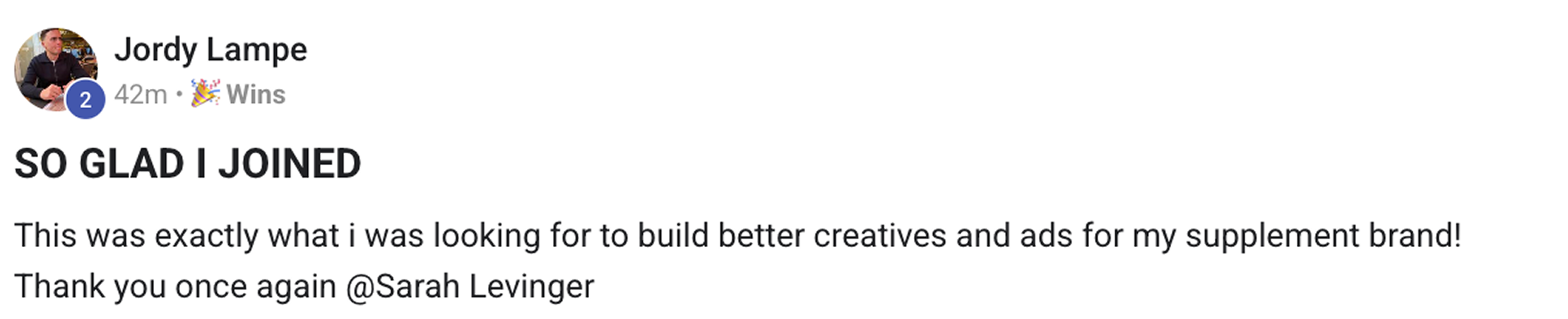
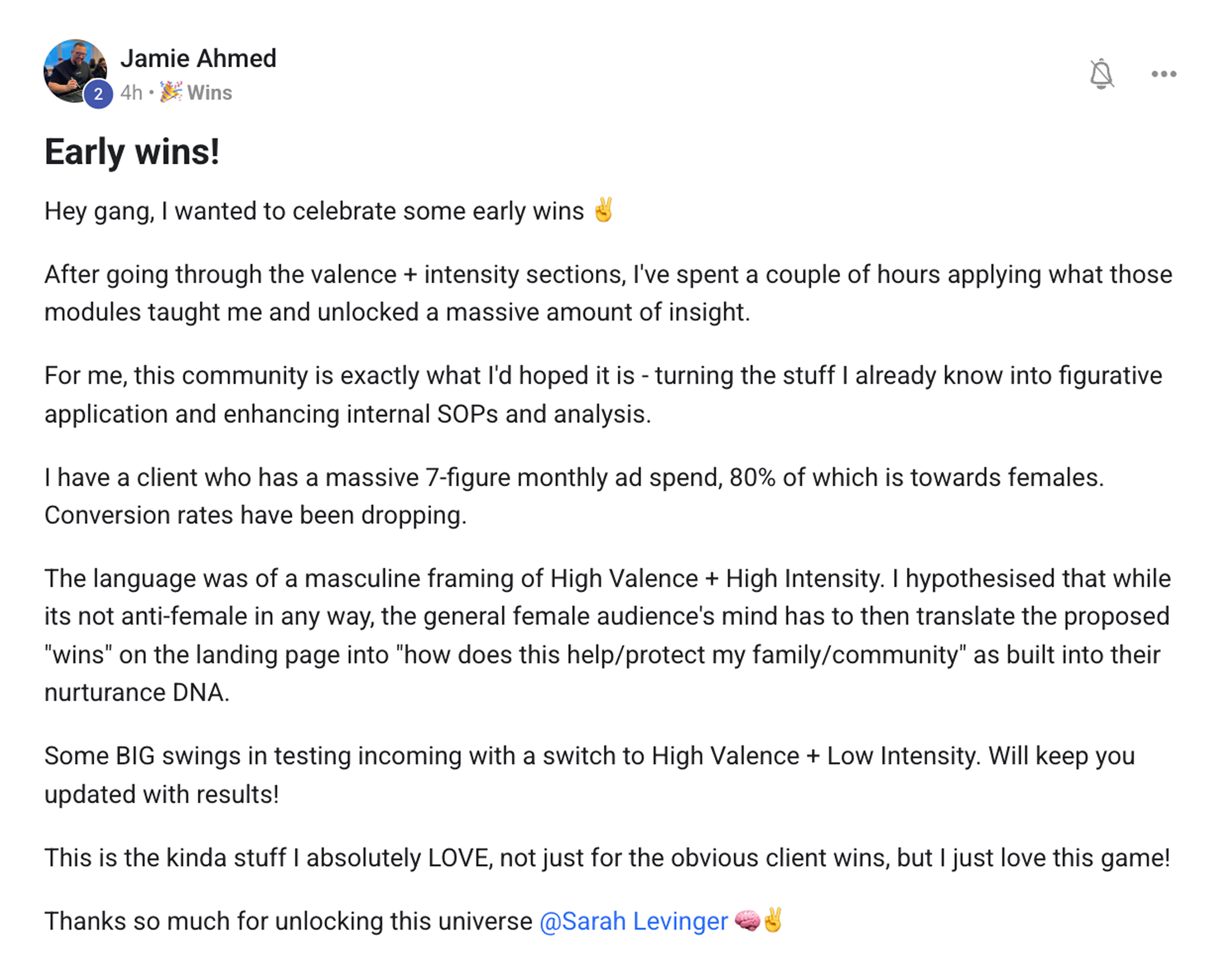

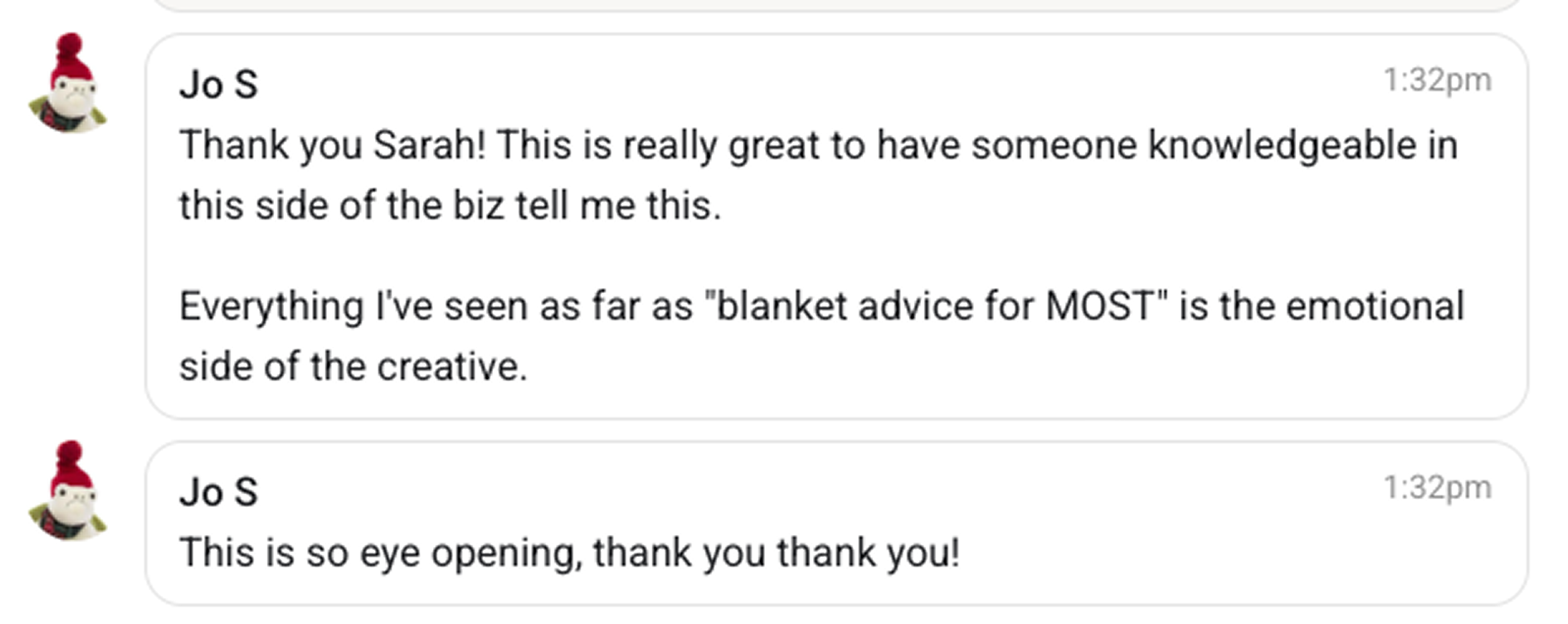

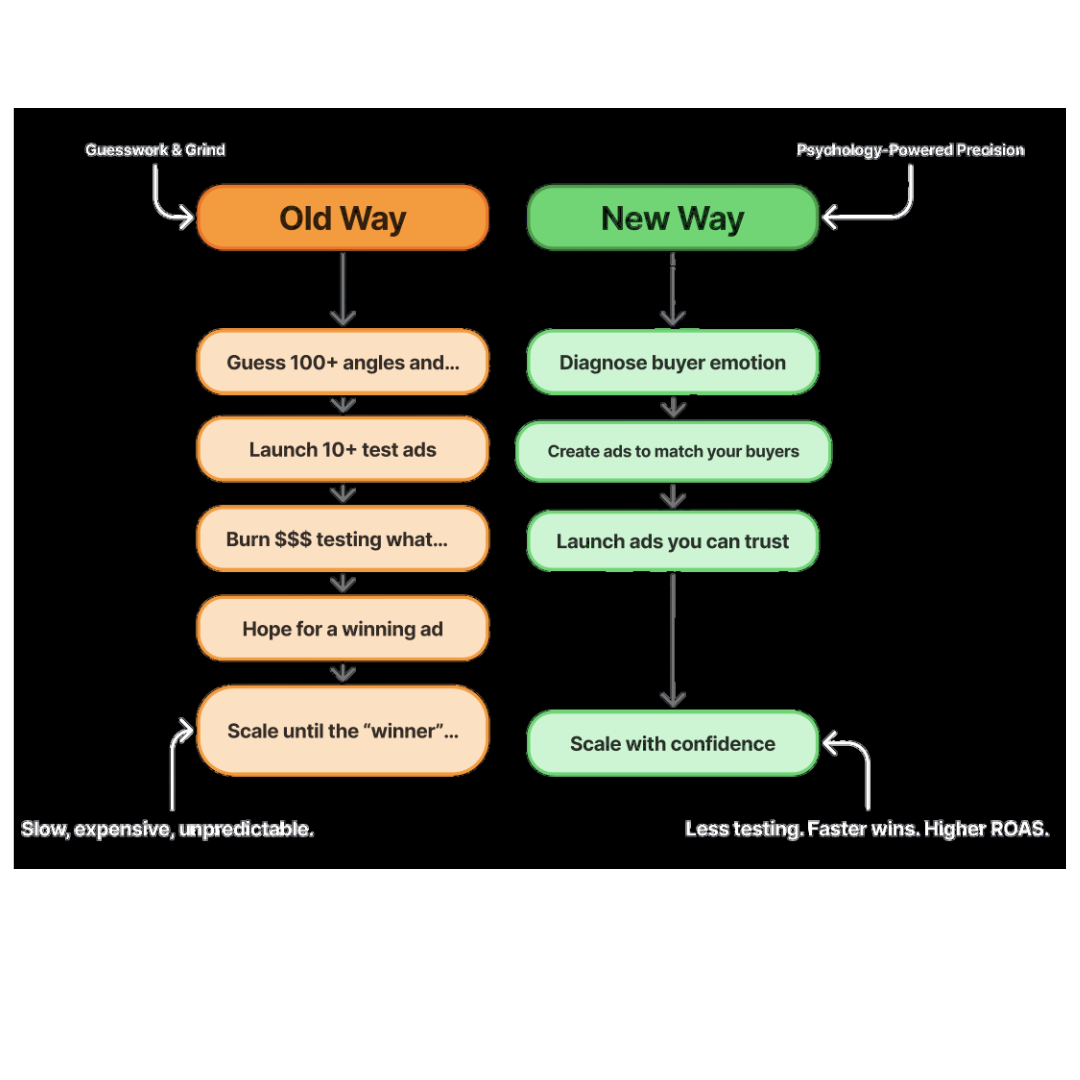
Why Top Brands Are Ditching “Spray & Pray” Testing for Psychology-Based Ads
Who this course is actually for...
Most marketers know when an ad should be working — but they have no idea why it flops. If that’s you, you’re in the right place. You’re also in the right place if…
Jamie Ahmed
9-Figure Growth Specialist
Here’s What You’ll Learn Inside the Valence & Intensity Model
This course breaks down the science and strategy behind emotionally calibrated ads, and gives you a step-by-step framework to diagnose, fix, and scale your creative with confidence.
LESSON 1
The Real Reason Your Ad Isn’t Working
Your copy, hook, and visuals might look right... But if your ad isn’t hitting, it’s almost always an emotional mismatch. Let's break down why your message feels “off” to your audience and how to realign it to meet them where they are emotionally.
LESSON 2
Understanding Valence & Intensity
Every emotion has two levers: Valence (positive or negative) and Intensity (whisper or scream). You’ll learn how to identify both and use them to pinpoint why your ad’s emotional tone either connects or repels.
LESSON 3
The 4 Emotional
Zones
Not all emotions are created equal.
This chapter breaks down the four key emotional zones your ad can live in, and when to use each. From cozy reassurance to high-stakes urgency, you’ll discover how to strategically choose the vibe your customer is most likely to respond to.
LESSON 4
Diagnosing Emotional Misfires
When an ad flops, it’s rarely the design or copy alone. This lesson gives you a simple diagnostic tool to spot emotional tone mismatches fast, so you can fix the real issue instead of rewriting endlessly.
LESSON 5
Fixing the Tone Without Rebuilding
Don’t scrap your entire ad.
Instead, tweak your verbs, visuals, and emotional promise to shift the tone.
This chapter shows you how small changes can turn a “meh” ad into a money-making one.
LESSON 6
Map + Move Your Messaging
Once you know which emotional zone to target, you’ll need to rewrite your messaging to match. Use these four simple prompts (one for each zone) to quickly shift your copy and visuals into alignment, without overthinking it.

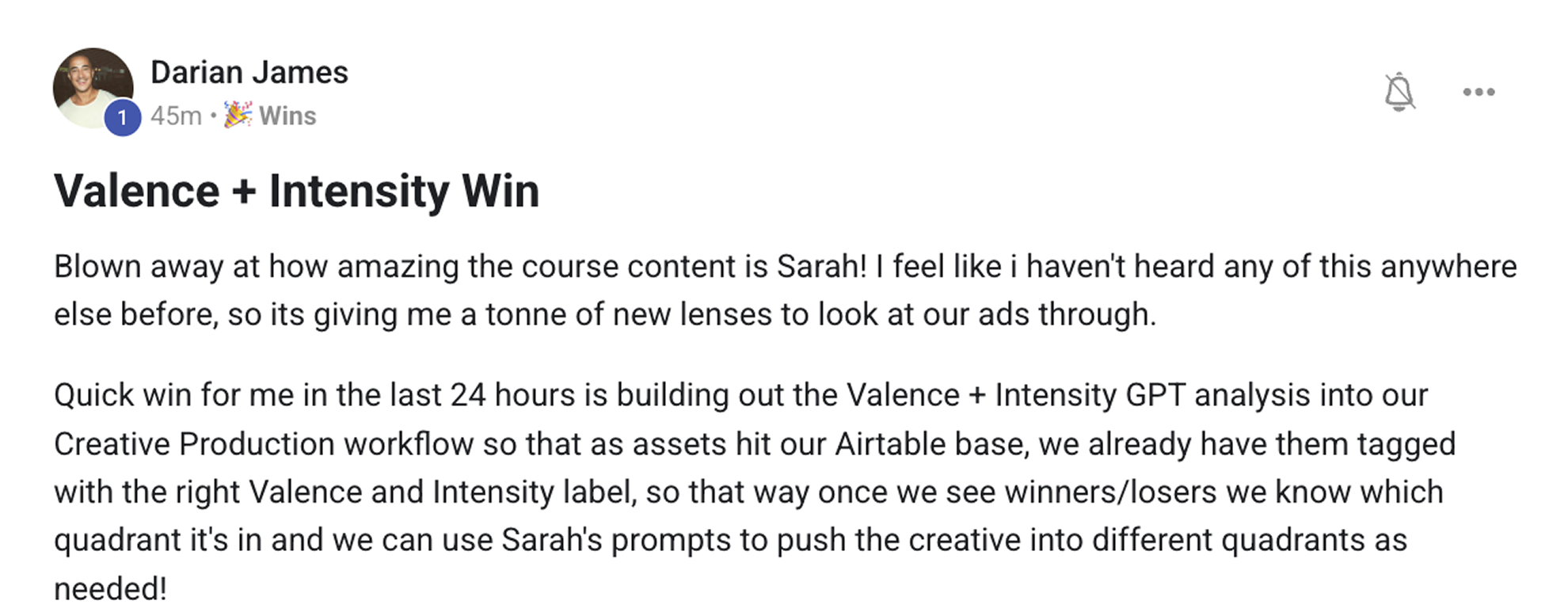
“Blown away at how amazing the course content is Sarah! I feel like I haven’t heard any of this anywhere else before, so it’s giving me a tonne of new lenses to look at our ads through.”

“The way you teach is fast, clear, and direct. It’s such a breath of fresh air. I’m usually bored by this kind of stuff, but everything you’ve shared feels relevant and has reignited my excitement to work on our product, the Cocoon.”

“We’re at 7-Figures in spend and our opt-in rate went from 18% to 35%, literally overnight using Valence & Intensity”

"We averaged a CTR of 0.4–0.5% last year. Our ads now pulling 2.5–2.8%!”

Master the Psychology Behind High-Performing Ads
Finally understand why your ads aren't converting — and fix it fast using a proven, science-backed framework to build smarter campaigns, drop your CAC, and increase ROAS without guessing or starting from scratch.
Learn Exactly Why Your Ads Flop — And How to Fix Them.
Create ads that convert, campaigns that scale, and messaging your audience can’t resist.
Learn the Valence & Intensity Model — a visual, plug-and-play framework for diagnosing and fixing underperforming creative.
Learn the Valence & Intensity Model — a visual, plug-and-play framework for diagnosing and fixing underperforming creative.
Apply the same strategies top founders and marketers are using to scale profitably without hiring agencies or rewriting their funnels.

Frequently Asked Questions
I already know how to write ads, is this still for me?
100%. This isn’t another copywriting program, it’s a plug-and-play emotional framework that helps you understand why ads work (or don’t). It’s built for smart marketers who want deeper insight and repeatable wins, whether you’re writing ads yourself or leading a team.
How fast can I get results from this?
Many users have seen dramatic improvements within 24–48 hours just by applying one part of the framework. You’ll walk away with tools you can apply in less than an hour, no need to watch 50 videos before seeing value.
What exactly am I getting for $97?
You’re getting a complete breakdown of the Valence & Intensity Model — including video trainings, visual frameworks, real ad examples, diagnostic tools, and emotional rewrite prompts. It’s designed to be fast, practical, and immediately applicable to your next campaign.
Do I need a big ad budget or fancy creative team?
Not at all. This model works whether you’re running $20/day ads or managing a team spending six figures a month. It helps you extract more value from the creative you already have, even if you’re solo.
What if this doesn’t work for my niche?
This framework works because it’s based on emotional patterns, not trends or templates. Whether you're in DTC, info products, SaaS, or services, if your audience has feelings, this works.